How Do You Stretch The It Band
A practical step-by-step guide to how do you stretch the it band, including preparation, instructions, common issues, tips, and next steps.
How Do You Stretch The It Band
If you're feeling tightness or discomfort along the outside of your thigh, you might be looking for ways to stretch your iliotibial (IT) band. This guide provides clear, safe, and effective techniques to relieve that tension. We'll walk you through the crucial understanding that you don't stretch the IT band itself, but rather the muscles connected to it, like your glutes and Tensor Fasciae Latae (TFL). Following these steps can help improve your flexibility, reduce discomfort, and support better movement patterns, especially for runners and active individuals.
Fast Answer
- Primary Focus: Stretch the gluteus (butt) and TFL (hip) muscles, not the IT band directly.
- Technique: Use gentle, static holds for 30-60 seconds per stretch.
- Key Tool: A foam roller is highly effective for releasing tension in the connected muscles.
- Avoid: Aggressive or painful stretching, which can cause irritation.
Before You Start
- A comfortable surface: A yoga mat or carpeted floor will provide cushioning.
- Comfortable clothing: Wear clothes that allow for a full range of motion.
- Optional foam roller: A standard foam roller is excellent for massaging the muscles around the IT band.
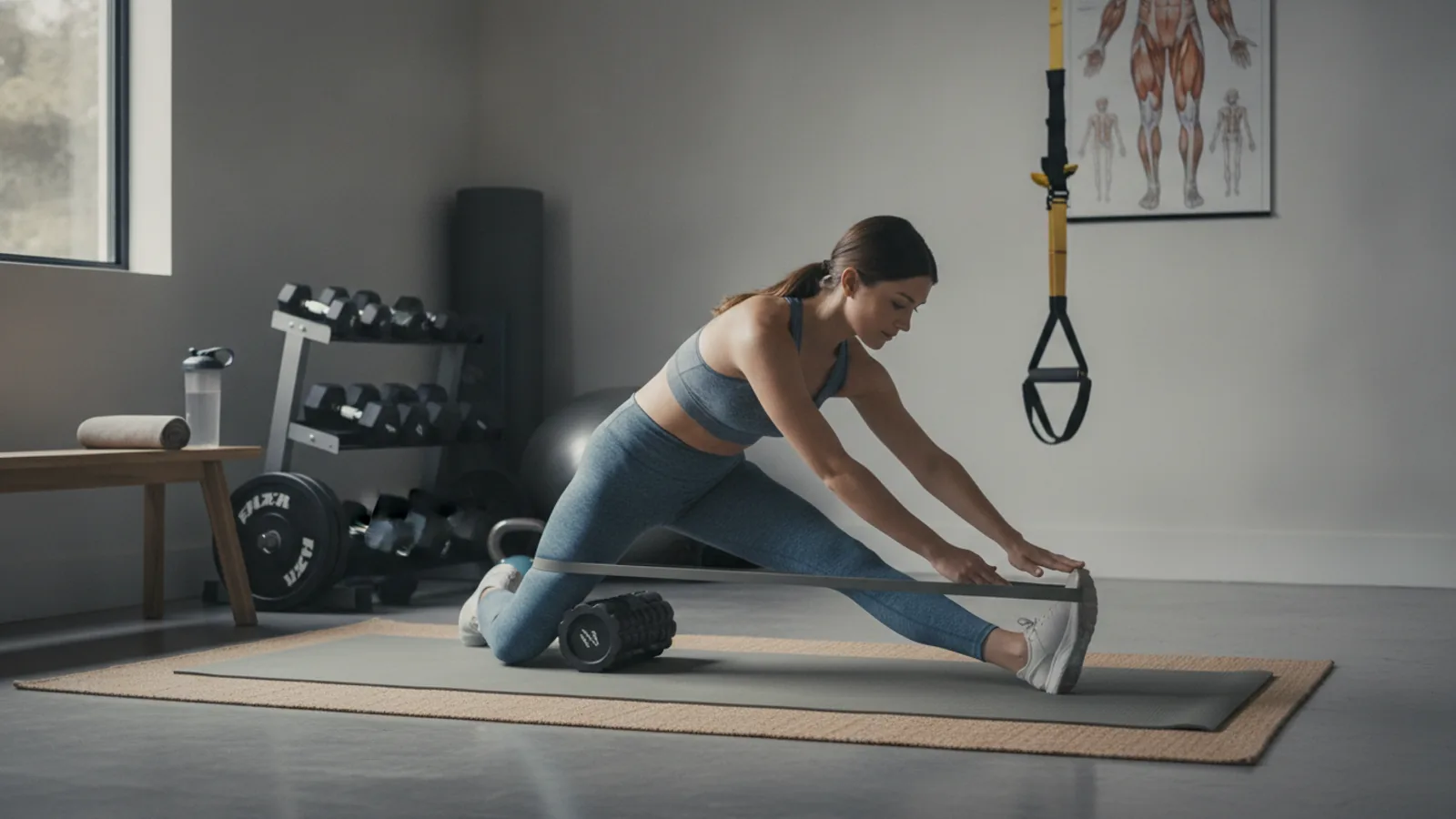
- Optional stretching strap: A yoga strap, belt, or towel can help you achieve a deeper, more controlled stretch.
Step-by-Step Instructions
Always Start with a Warm-Up
Never stretch cold muscles. A proper warm-up increases blood flow to your muscles, making them more pliable and less prone to injury. Before you begin stretching, perform 5-10 minutes of light cardio. This could be a brisk walk, jogging in place, jumping jacks, or cycling on a stationary bike at a low resistance. The goal is to gently raise your heart rate and feel a bit of warmth in your body without causing fatigue.
Perform the Standing Side-Leaning IT Band Stretch
This is a foundational stretch that targets the TFL and the upper part of the IT band. It's accessible and can be done almost anywhere.
- Stand upright with your feet together, near a wall or sturdy chair for balance if needed.
- To stretch your right IT band, cross your right leg behind your left leg.
- Place your right hand on your hip and extend your left arm overhead.
- Gently lean your torso to the left, pushing your right hip out to the side. You should feel a gentle pull along the outside of your right hip and thigh.
- Hold the stretch for 30 seconds, breathing deeply and evenly. Avoid leaning forward or backward.
- Slowly return to the starting position and repeat on the other side by crossing your left leg behind your right.
Use a Foam Roller on Your TFL and Glutes
Foam rolling, or self-myofascial release, is one of the most effective ways to address IT band-related tightness. The key is to roll the muscles that connect to the IT band, not the band itself, which can increase inflammation.
For the Tensor Fasciae Latae (TFL):
- Lie on your side with the foam roller positioned just below your hip bone. Your TFL is the small muscle located toward the front of your hip, essentially where your front pocket would be.
- Support your upper body with your forearms and use your top leg for balance by placing its foot flat on the floor in front of you.
- Gently roll back and forth over this small area for 30-60 seconds. The movement is very small, just a few inches.
- If you find a particularly tender spot, pause on it for 20-30 seconds and breathe deeply until you feel the tension start to release.
For the Glutes (Gluteus Medius/Maximus):
- Sit on the foam roller, with your weight on one glute (for example, the right one).
- Cross your right ankle over your left knee, creating a "figure four" shape.
- Gently roll back and forth over the fleshy part of your right buttock, exploring different angles to find tight spots.
- Continue for 30-60 seconds before switching to the other side.
Execute the Reclining Hip and Glute Stretch
This stretch, often called the "Pretzel Stretch" or a supine twist, targets the glutes and piriformis, which can significantly influence IT band tension.
- Lie flat on your back with your knees bent and feet flat on the floor.
- Extend your arms out to your sides in a "T" shape to stabilize your upper body.
- Cross your right leg over your left knee.
- Slowly let both knees fall to the left side, allowing your right hip to lift off the floor. Keep your shoulders pressed gently into the ground.
- You should feel a stretch through your right glute and lower back. To deepen it, you can use your left hand to gently press down on your right knee.
- Hold for 30-60 seconds while breathing deeply.
- Engage your core to slowly bring your knees back to the center, then uncross your legs and repeat on the other side.
Perform the Seated Figure-Four Stretch
This is another excellent stretch for the gluteal muscles and external hip rotators, which helps relieve the pulling forces on the IT band. It can be done on the floor or sitting in a chair.
- Sit on the floor with your knees bent and feet flat in front of you. Support yourself by placing your hands on the floor behind you.
- Lift your right foot and cross your right ankle over your left knee. Your right shin should be as parallel to your chest as possible.
- Keep your right foot flexed to help protect your knee joint.
- To increase the stretch, slowly slide your left foot closer to your body. You can also press gently on your right knee.
- Sit up tall, keeping your spine straight. You should feel a deep stretch in your right hip and glute.
- Hold for 30 seconds, then release and switch sides.
Quick Reference
| Situation | Use This Method | Why |
|---|---|---|
| Feeling tightness at the very top/side of your hip | Foam Roll the TFL | This directly targets the TFL muscle, a primary source of tension that pulls on the IT band. |
| General outer thigh discomfort after a run or walk | Standing Side-Leaning Stretch | It's a gentle, accessible stretch that provides immediate relief along the entire kinetic chain. |
| Deep ache in your glutes or overall hip stiffness | Seated Figure-Four or Reclining Hip Stretch | These stretches specifically target the deep gluteal muscles (like the piriformis) whose tightness is a common root cause of IT band issues. |
| You want to improve mobility and prevent future issues | Combine stretching with strengthening exercises | Stretching addresses the symptom (tightness), while strengthening the glutes and core addresses the underlying cause (muscular imbalance). |
Common Problems When You Stretch The It Band
Problem: You feel a sharp pain instead of a stretch.
Solution: Stop immediately. Pain is your body's signal that something is wrong. A stretch should feel like a gentle, deep pull or tension, not a sharp, stabbing, or pinching sensation. If you feel pain, you are likely pushing too far, targeting the wrong area (like a nerve or joint), or dealing with an injury that needs medical attention. Back off to a point where you feel no pain, or try a different stretch altogether.
Problem: You aren't feeling the stretch in the target area (the hip/glute).
Solution: Make small adjustments to your form. For the standing stretch, try pushing your hip out more to the side rather than just leaning your torso. For seated or reclining stretches, ensure your spine is straight and you are rotating from your hips, not your lower back. Sometimes, a tiny change in the angle of your knee or the position of your torso can make a big difference in isolating the correct muscles.
Problem: You're holding your breath during the stretch.
Solution: Focus on your breathing. Holding your breath causes your muscles to tense up, which is the opposite of what you want. Inhale deeply through your nose, and as you exhale slowly through your mouth, try to sink a little deeper into the stretch. This practice, known as diaphragmatic breathing, helps calm your nervous system and signals your muscles that it's safe to relax and lengthen.
Advanced Tips for how do you stretch the it band
Combine Stretching with Targeted Strengthening
IT band issues are very often a symptom of weak hip abductor muscles, particularly the gluteus medius. When these muscles are weak, other muscles (like the TFL) overcompensate, becoming tight and pulling on the IT band. To solve the problem long-term, incorporate strengthening exercises into your routine on non-stretching days.
- Clamshells: Lie on your side with your knees bent and stacked. Keeping your feet together, lift your top knee toward the ceiling without rocking your pelvis back.
- Side Leg Raises: Lie on your side with your legs straight and stacked. Slowly lift your top leg towards the ceiling, keeping it straight, and then lower it with control.
- Glute Bridges: Lie on your back with your knees bent and feet flat. Squeeze your glutes and lift your hips off the floor until your body forms a straight line from your shoulders to your knees.
Incorporate Mobility Work
Beyond static stretching, active mobility drills can improve your hip's range of motion and function. Consider adding movements like hip circles, leg swings (front-to-back and side-to-side), and deep squats (bodyweight only) to your warm-up routine. This prepares the hip joint for movement and helps address the stiffness that contributes to IT band tension.
Assess Your Biomechanics
Take a look at factors in your daily life and fitness routine that might be contributing to the problem. Are your running shoes worn out? Do you always run on the same side of a sloped road? Does your desk chair promote poor posture? Small, consistent stressors can lead to muscular imbalances. Addressing these root causes can be more effective than stretching alone.
How Do You Stretch The It Band FAQ
How often should I stretch my IT band?
If you're actively feeling tightness, aim to perform this stretching routine once a day. For general maintenance and prevention, 3-5 times per week is sufficient. Consistency is more important than duration; a 10-minute daily session is far more effective than one long session per week.
Is it possible to overstretch the IT band?
Yes, but the real danger comes from improper technique. Since the IT band is dense connective tissue (fascia), not a muscle, aggressively trying to lengthen it can lead to inflammation and irritation, particularly where it attaches at the knee and hip. This is why the focus must be on gently stretching and releasing the *muscles* that attach to it. Listen to your body and never push through sharp pain.
What's the difference between a tight IT band and IT Band Syndrome?
A "tight IT band" usually refers to a sensation of stiffness or tension along the outer thigh, often caused by tight glute and TFL muscles. IT Band Syndrome (ITBS) is a specific overuse injury characterized by sharp, localized pain on the outside of the knee. This pain is caused by the IT band repeatedly rubbing against the femoral epicondyle (a bony prominence of the thigh bone). While muscle tightness can contribute to ITBS, the syndrome itself requires a specific diagnosis and a comprehensive treatment plan from a healthcare professional, which often includes rest, strengthening, and form correction.
Final Checklist for how do you stretch the it band
- Warm up for 5-10 minutes with light cardio before every stretching session.
- Focus on the right muscles: Remember to target your glutes and TFL, not the IT band itself.
- Hold each stretch for 30-60 seconds without bouncing.
- Use a foam roller on the muscular parts of your hip and glutes, avoiding direct pressure on bone or the main band.
- Breathe deeply and consistently throughout each stretch to help your muscles relax.
- Stop immediately if you feel any sharp, stabbing, or pinching pain.
- Complement stretching with strengthening exercises for your hips and glutes for long-term relief.
- Consult a physical therapist if your pain is severe, persistent, or localized at your knee.