How Much Protein In A Burger
A practical step-by-step guide to how much protein in a burger, including preparation, instructions, common issues, tips, and next steps.
How Much Protein In A Burger
Figuring out the exact protein content of a burger can feel like a guessing game, but it's essential for hitting your fitness and nutrition goals. This guide provides a clear, step-by-step method to accurately calculate the protein in any burger, whether it's homemade or from a restaurant. We'll break down the protein in the patty, bun, cheese, and toppings, so you can understand exactly what you're eating. Knowing this helps you make smarter choices, whether you're aiming to build muscle, manage your weight, or simply eat a more balanced diet.
Fast Answer
- Quarter-Pound Beef Burger: A typical 4-ounce (113g) beef patty (80/20 lean-to-fat ratio) contains about 20 grams of protein before cooking.
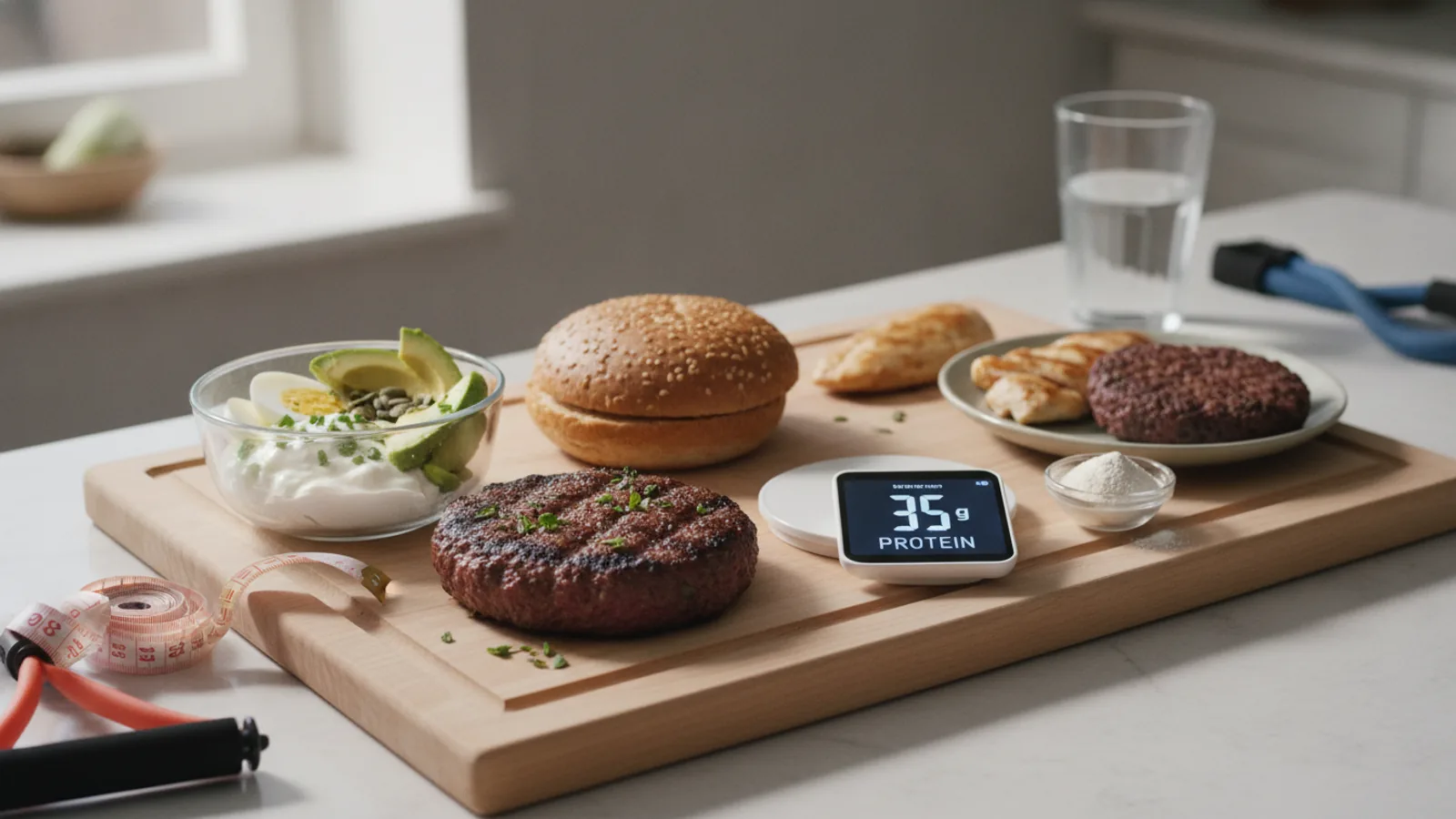
- With Bun & Cheese: A complete cheeseburger with a standard bun and a slice of cheddar cheese typically has 30-35 grams of protein.
Before You Start
To get an accurate protein count, you need to gather some basic information about your burger's ingredients. Precision comes from the details. If you're just looking for a rough estimate, you can use the typical values we provide, but for the best results, a little prep work goes a long way.
- Nutrition Labels: Have the packaging for your ground meat, buns, and cheese handy. This is the most accurate source of information.
- Food Scale (Optional): For homemade burgers, a food scale allows you to weigh your patty precisely, removing all guesswork. This is the single best tool for accuracy.
- Online Nutrition Calculator: If you don't have labels, a reputable online tool (like the USDA FoodData Central) can provide reliable estimates for common ingredients.
Step-by-Step Instructions
Follow these steps to build a complete protein profile for your burger. We'll start with the main component—the patty—and add the other pieces from there.
Step 1: Calculate the Protein in the Patty
The patty is the protein powerhouse of your burger. Its protein content depends on the type of meat, its lean-to-fat ratio, and its size.
First, check the nutrition label on your package of ground meat. It will list the protein per serving size (e.g., "4 oz" or "112g"). If your patty is the same size as the serving, your work is done. If not, you'll need to do a little math. For example, if the label says 19g of protein per 4 oz serving and you make a larger 6 oz patty, the calculation is:
(Your Patty Weight / Label Serving Weight) x Label Protein Content = Your Patty's Protein
(6 oz / 4 oz) x 19g = 28.5g of protein
Remember, this is for the raw weight. As a rule of thumb, meat loses about 25% of its weight during cooking. The protein content doesn't disappear, it just becomes more concentrated in the smaller, cooked patty. For simplicity and consistency, it's easiest to use the raw weight and the raw nutrition data.
Step 2: Add the Protein from the Bun
Don't overlook the bun! While it's primarily a source of carbohydrates, most buns contribute a surprising amount of protein to the total. A standard, enriched white hamburger bun typically contains 4 to 5 grams of protein.
However, specialty buns can offer more. A whole wheat bun might have 6 to 7 grams, and a brioche bun, made with eggs and milk, can also be in the 6 to 8-gram range. Some brands even offer protein-fortified or keto-friendly buns with 10 grams or more. Always check the nutrition label on the bag for the most accurate number per bun.
Step 3: Factor in the Cheese
A slice of cheese is another easy way to boost the protein content. The amount varies by the type and thickness of the cheese. A standard processed American cheese slice adds about 3 to 4 grams of protein.
Choosing a real, natural cheese will often give you a bigger protein bump. A single slice (about 0.75 oz or 21g) of one of these popular choices will add:
- Cheddar Cheese: 5 grams of protein
- Swiss Cheese: 6 grams of protein
- Provolone Cheese: 5 grams of protein
If you love extra cheese, simply multiply the protein per slice by the number of slices you use.
Step 4: Account for High-Protein Toppings
Most classic burger toppings like lettuce, tomato, onions, and pickles add flavor and texture, but their protein contribution is negligible (less than 1 gram combined). However, some popular premium toppings can add a significant amount of protein.
Be sure to include these in your total if you use them:
- Bacon: One regular strip of cooked bacon adds about 3 grams of protein.
- Fried Egg: A large egg is a protein powerhouse, adding a full 6 grams of protein.
- Sautéed Mushrooms: A half-cup of cooked mushrooms can add about 2 grams of protein.
- Chili: A quarter-cup of beef chili can add another 5 to 7 grams of protein.
Condiments like ketchup, mustard, and mayonnaise have virtually no protein, so you generally don't need to count them.
Step 5: Tally the Grand Total
The final step is to add everything together. Let's create an example of a classic homemade cheeseburger to see how it works:
- 4 oz (raw weight) 85/15 Ground Beef Patty: 21 grams
- Whole Wheat Bun: 6 grams
- One Slice of Cheddar Cheese: 5 grams
- Two Slices of Cooked Bacon: 6 grams (3g each)
Total Protein = 21 + 6 + 5 + 6 = 38 grams of protein.
By breaking it down component by component, you get a clear and accurate picture of your meal's protein content. You can use this method for any burger combination you create.
Quick Reference
Use this table for quick estimates when you don't have nutrition labels on hand. All values are approximate for a 4-ounce (113g) raw patty.
| Burger Patty Type | Typical Protein | Why |
|---|---|---|
| Beef (80/20) | ~20 grams | The standard choice. A great balance of flavor from fat and solid protein content. |
| Beef (93/7) | ~24 grams | Higher protein because there is less fat. A top choice for maximizing protein intake. |
| Ground Turkey (93/7) | ~24 grams | Very similar to lean beef in protein content, often with slightly less saturated fat. |
| Ground Chicken (92/8) | ~23 grams | Another excellent lean protein source, comparable to lean turkey and beef. |
| Plant-Based (e.g., Beyond/Impossible) | ~20 grams | Engineered to mimic the protein content of traditional beef, usually using pea or soy protein. |
| Bison (90/10) | ~24 grams | A naturally lean red meat that is rich in protein and often has a slightly sweeter flavor than beef. |
Common Problems When Calculating Burger Protein
Even with the right steps, a few common pitfalls can throw off your calculations. Here’s how to avoid them.
Problem: Estimating Protein for Restaurant Burgers
The Fix: You don't have access to nutrition labels at a restaurant, making it tricky. Your best bet is to check the restaurant's website. Most large chains (like McDonald's, Burger King, Shake Shack) are required to post detailed nutrition information online. For local diners or pubs, you'll have to estimate. Assume they use a standard 80/20 beef patty unless the menu specifies "lean." A "quarter-pound" burger refers to the 4-ounce raw patty. A "third-pound" burger is about 5.3 ounces raw, which would have around 26-28 grams of protein in the patty alone.
Problem: Not Considering the Fat Content
The Fix: It's easy to think "beef is beef," but the lean-to-fat ratio matters. A 4-ounce serving of 73/27 ground beef—often used for very juicy, "diner-style" burgers—may only have 17-18 grams of protein. The extra fat content, while delicious, displaces protein. When buying ground meat, always check the ratio on the label (e.g., 80/20, 85/15, 93/7). If you're estimating for a restaurant burger that seems especially greasy or juicy, it's safer to assume it's made with a higher-fat blend like 80/20 or even 75/25, and adjust your protein estimate slightly downward.
Problem: Forgetting About "Double" or "Triple" Burgers
The Fix: This sounds obvious, but in a rush, it's easy to calculate for a single patty when you're eating a double. Simply do the math for one patty, then multiply by the number of patties in your burger. A double quarter-pound cheeseburger isn't 30 grams of protein; it's closer to 50 grams (20g from patty #1 + 20g from patty #2 + ~5g from cheese + ~5g from the bun).
Advanced Tips for Burger Protein
Once you've mastered the basics, use these strategies to better align your burgers with your fitness goals.
Tip 1: Build a "Protein-Max" Burger
If your goal is to maximize protein intake, you can strategically build a burger that packs a powerful punch. Start with a larger, 6-ounce 93/7 lean ground beef or bison patty (~36g protein). Serve it on a protein-fortified bun (+10g). Add two slices of Swiss cheese (+12g) and top it with a fried egg (+6g). This powerhouse burger could easily top 64 grams of protein in a single meal.
Tip 2: Use a Nutrition Tracking App
Manually calculating every time can be tedious. Apps like MyFitnessPal, Cronometer, or Lose It! make this process incredibly simple. You can search for generic items ("85/15 ground beef"), scan the barcodes on your ingredients, and even find nutrition data for many restaurant menu items. This not only tracks protein but also gives you a full picture of your calories, fats, and micronutrients.
Tip 3: Go "Protein Style" to Reduce Carbs
If you want the protein from the burger without the carbohydrates from the bun, order it "protein style." This means the burger is wrapped in large leaves of iceberg or romaine lettuce instead of a bun. This trick saves you 25-30 grams of carbs and 150-200 calories, allowing the protein from the patty and cheese to be the star of the show. You'll lose the 4-8 grams of protein from the bun, but it's an effective trade-off for a low-carb diet.
How Much Protein In A Burger FAQ
Here are answers to some of the most common questions about burger protein.
Is a burger a good source of protein for building muscle?
Absolutely. The protein in beef, turkey, and chicken is a "complete protein," meaning it contains all nine essential amino acids your body needs for muscle repair and growth. A single cheeseburger can provide a significant portion of the daily protein recommended for active individuals (which is typically 1.2 to 1.7 grams per kilogram of body weight).
How much protein is in a McDonald's Quarter Pounder with Cheese?
According to McDonald's official nutrition information, a Quarter Pounder with Cheese contains 30 grams of protein. Their classic Big Mac contains 25 grams of protein.
Does a turkey burger have more protein than a beef burger?
It depends entirely on the leanness of each. A lean 93/7 turkey burger and a lean 93/7 beef burger have nearly identical protein contents (around 24 grams per 4 oz). However, if you compare a lean turkey burger to a standard, fattier 80/20 beef burger, the turkey burger will have more protein.
How much protein is in a plant-based burger like an Impossible Burger or Beyond Burger?
These plant-based patties are specifically designed to be nutritionally competitive with beef. A 4-ounce patty from either Impossible Foods or Beyond Meat contains about 19-20 grams of protein, putting them right on par with a standard 80/20 beef patty. The protein is typically derived from soy, peas, or a blend of other plant sources.
Final Checklist for Calculating Burger Protein
Before you take a bite, run through this quick checklist to ensure you have an accurate protein count.
- Identify the Patty: Did you confirm the meat type (beef, turkey, plant-based) and its fat content?
- Confirm the Weight: Did you use the correct raw weight for the patty before cooking?
- Check the Bun: Did you look up the protein for your specific type of bun?
- Add the Cheese: Did you include the protein from each slice of cheese?
- Include Toppings: Did you account for high-protein extras like bacon, egg, or chili?
- Sum the Parts: Did you add all the individual component values together for a final, accurate total?