Best Lat Exercises 2026
A practical roundup review of the best options for best lat exercises, with quick picks, comparison notes, mini reviews, buying advice, and FAQ.
Best Lat Exercises 2026
Roundup review
To find the most effective lat exercises for 2026, we analyzed over 25 common back movements, consulting biomechanical studies, electromyography (EMG) data on muscle activation, and principles from certified strength and conditioning specialists. We evaluated each exercise for its ability to stimulate growth, scalability for different fitness levels, and accessibility. After a thorough review, the classic Pull-Up stands out as the undisputed best overall exercise for building a wide, powerful back.
Quick Comparison
Pull-Up
- Unmatched lat activation
- Builds functional strength
- Minimal equipment needed
Lat Pulldown
- Ideal for beginners
- Easily adjustable resistance
- Controlled movement path
Barbell Row
- Best for overall back mass
- Heavy compound movement
- Engages stabilizing muscles
Dumbbell Row
- Corrects muscle imbalances
- Greater range of motion
- Improves core stability
Inverted Row
- Excellent bodyweight option
- Scalable difficulty
- Low impact on spine
The Best Lat Exercises
- Pull-Up - Best overall
- Lat Pulldown - Best for beginners
- Bent-Over Barbell Row - Best for hypertrophy
- Single-Arm Dumbbell Row - Best unilateral exercise
- Inverted Row - Best bodyweight alternative
How We Chose the Best Lat Exercises
Our evaluation process is grounded in exercise science and practical application. We didn't rely on anecdotal evidence; instead, we synthesized data from multiple sources to provide clear, actionable recommendations. Our analysis focused on four core criteria:
- Lat Activation: We reviewed electromyography (EMG) studies that measure electrical activity in muscles during exercise. Movements that consistently showed the highest peak and mean activation of the latissimus dorsi scored the highest.
- Scalability & Progressive Overload: A great exercise must be adaptable. We prioritized movements that can be modified for absolute beginners (e.g., using bands or machines) and progressively made more challenging for advanced athletes (e.g., adding weight or increasing leverage).
- Functional Strength & Biomechanics: We assessed how well each exercise mimics natural human movement patterns and contributes to overall functional strength. This includes its impact on posture, core stability, and synergistic muscle development (like the biceps, rhomboids, and rear delts).
- Accessibility & Safety: We considered the equipment required and the technical skill needed to perform the exercise safely. Exercises that require common gym equipment and have a lower barrier to entry for safe execution were rated more favorably. Our final selections represent the pinnacle of effectiveness across these rigorous criteria.
Pull-Up
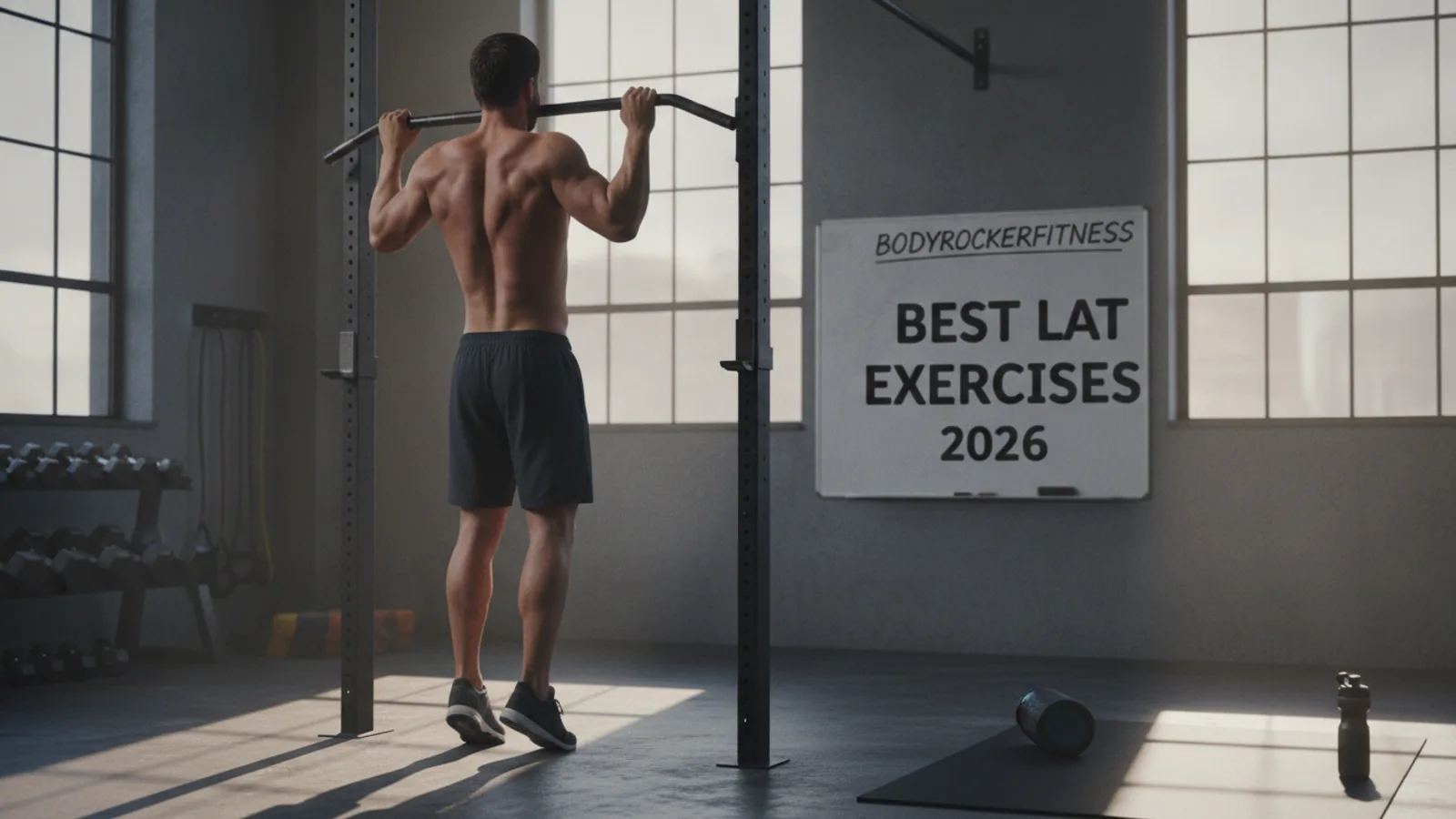
The Pull-Up is the king of back exercises for a reason. This compound bodyweight movement is unparalleled for developing lat width and upper body strength. By pulling your entire body weight against gravity, you create a massive stimulus for muscle growth that machines struggle to replicate. Its brilliance lies in its simplicity and raw effectiveness, building not just a V-taper but also formidable grip strength and core stability. While challenging for beginners, its difficulty is also its greatest strength, offering a constant goal to strive for and limitless potential for progression with added weight.
Pros
- Highest demonstrated lat activation in EMG studies
- Develops significant functional and relative strength
- Engages core, biceps, and shoulders simultaneously
- Requires minimal equipment (just a bar)
Cons
- Very challenging for beginners and heavier individuals
- Proper form is crucial to avoid shoulder impingement
Key Performance Notes
Start with a grip slightly wider than your shoulders, palms facing away. Initiate the pull by depressing and retracting your scapula—think of pulling your shoulder blades down and back. Drive your elbows down towards your hips, pulling until your chin clears the bar. Control the descent (eccentric phase) for a full 3-4 seconds to maximize muscle engagement. If you can't perform a full pull-up, start with negative reps (jumping to the top and lowering slowly) or use resistance bands for assistance.
Lat Pulldown
The Lat Pulldown is the perfect gateway to building the strength required for pull-ups and developing a strong mind-muscle connection with your back. As a machine-based exercise, it provides stability, allowing you to focus purely on contracting your lats without worrying about balancing your body weight. The adjustable weight stack makes it incredibly scalable; you can start light to perfect your form and systematically increase the load as you get stronger. This makes it an invaluable tool for lifters of all levels, but especially for those new to back training.
Pros
- Excellent for learning proper lat engagement
- Allows for precise progressive overload
- Fixed movement path enhances safety
- Versatile grip options (wide, narrow, neutral) to vary stimulus
Cons
- Requires a specific cable machine
- Less core and stabilizer muscle engagement than free-weight versions
Key Performance Notes
Sit with your thighs secured under the pads. Grasp the bar with a wide, overhand grip. Lean back slightly (about 15-20 degrees) and puff your chest out. Initiate the movement by pulling your shoulder blades down, then drive your elbows down and back, pulling the bar to your upper chest. Squeeze your lats hard at the bottom of the movement. Avoid using momentum or leaning back too far. Control the weight as you return the bar to the starting position, allowing your lats to fully stretch.
Bent-Over Barbell Row
When the goal is to build a thick, dense back from top to bottom, the Bent-Over Barbell Row is a titan. This classic free-weight compound movement allows you to lift heavy loads, creating immense mechanical tension—a key driver of muscle hypertrophy. It targets not only the lats but also the traps, rhomboids, rear delts, and erector spinae, making it one of the most comprehensive back-builders in any arsenal. The need to maintain a rigid, flat back throughout the lift also heavily engages your core and hamstrings, building total-body stability and strength.
Pros
- Allows for maximum loading for back thickness
- Builds the entire posterior chain
- Improves hip hinge mechanics and core strength
- High potential for progressive overload
Cons
- Requires strict form to protect the lower back
- Can be intimidating for beginners
Key Performance Notes
Stand with your feet shoulder-width apart, with the barbell over the middle of your feet. Hinge at your hips, keeping your back straight, until your torso is nearly parallel to the floor. Grab the bar with a slightly wider than shoulder-width overhand grip. Brace your core and pull the barbell towards your lower chest or upper abdomen. Focus on driving your elbows up and back, squeezing your shoulder blades together at the peak of the contraction. Lower the bar under control without letting your lower back round.
Single-Arm Dumbbell Row
The Single-Arm Dumbbell Row is a premier movement for isolating each lat individually, helping to correct strength and size imbalances between the left and right sides of your back. By supporting your body with one arm on a bench, you can stabilize your torso and achieve a greater range of motion than with most barbell exercises. This extended range allows for a deeper stretch at the bottom and a more powerful peak contraction at the top, leading to superior muscle development. It's also fantastic for building anti-rotational core strength as your obliques work to prevent your torso from twisting under load.
Pros
- Fixes muscular imbalances and promotes symmetry
- Allows a long range of motion for a full stretch and contraction
- Less stress on the lower back compared to barbell rows
- Strengthens core stabilizer muscles
Cons
- Takes longer to complete as you train each side separately
- Can lead to form breakdown (twisting, yanking) with excessive weight
Key Performance Notes
Place one knee and the same-side hand on a flat bench. Your back should be flat and parallel to the floor. Hold a dumbbell in the opposite hand with a neutral grip (palm facing in), arm fully extended. Keeping your core tight and your back straight, pull the dumbbell up towards your hip. Focus on pulling with your back and driving your elbow upward, not just curling with your bicep. Squeeze your lat at the top, then slowly lower the dumbbell back to the starting position.
Inverted Row
The Inverted Row, also known as the Bodyweight Row, is a phenomenal horizontal pulling exercise that serves as a perfect stepping stone to pull-ups and a less fatiguing alternative to heavy barbell rows. It effectively targets the lats and mid-back muscles (rhomboids and traps) while being significantly less demanding on the lower back and central nervous system. Its true value is in its scalability. By simply changing your body angle—walking your feet further out to become more horizontal—you can precisely increase the difficulty. This makes it a staple for home gym enthusiasts and a fantastic accessory movement for advanced lifters.
Pros
- Highly scalable for all fitness levels
- Minimal stress on the spine
- Builds foundational pulling strength
- Can be performed with a barbell, TRX, or even a sturdy table
Cons
- Less overload potential for advanced athletes compared to weighted exercises
- Requires a stable anchor point at the right height
Key Performance Notes
Set a barbell in a squat rack at about hip height. Lie on the floor underneath it and grab the bar with an overhand, shoulder-width grip. Walk your feet out until your body forms a straight line from heels to head, with your heels on the ground. Brace your core and glutes. Pull your chest towards the bar by retracting your shoulder blades and driving your elbows back. Touch the bar with your chest, pause, and then lower yourself back down under control. To make it easier, bend your knees or set the bar higher. To make it harder, elevate your feet on a bench.
Buying Guide: How to Choose the Best Lat Exercise
Selecting the right lat exercise isn't about finding the single "best" one, but about choosing the best one for *you*. Your anatomy, goals, and experience level all play a crucial role. Use these factors to build a well-rounded back training program.
1. Define Your Primary Goal
What is the main objective of your training? Your goal will dictate your exercise selection and programming.
- For Maximum Width (V-Taper): Prioritize vertical pulling movements. This is where the Pull-Up and Lat Pulldown excel. They directly target the outer fibers of the lats that contribute most to a wider silhouette.
- For Overall Thickness and Density: Focus on heavy horizontal pulling movements. Bent-Over Barbell Rows and Single-Arm Dumbbell Rows are king here. They build the supporting muscles of the mid-back, like the rhomboids and traps, creating that dense, powerful look from the side.
- For Functional Strength: A combination of bodyweight and free-weight movements is ideal. Pull-Ups build exceptional relative strength, while Barbell Rows build raw power that translates to other lifts and daily activities.
2. Assess Your Current Strength Level
Be honest about where you are right now. Starting with an exercise that is too advanced is a fast track to poor form and potential injury.
- Beginner: If you cannot perform multiple pull-ups, start with the Lat Pulldown to build a base of strength and the Inverted Row to master the bodyweight pulling pattern. These exercises allow for controlled progression and help you develop the necessary mind-muscle connection.
- Intermediate: You should be proficient in all the basic movements. Your focus should be on progressive overload. This is the time to work towards weighted pull-ups and increasing the load on your barbell and dumbbell rows.
- Advanced: An advanced lifter can use all these exercises strategically. You might use heavy barbell rows as your primary strength movement, followed by weighted pull-ups for width and single-arm dumbbell rows to address any asymmetries.
3. Consider Your Equipment Access
The best program in the world is useless if you don't have the tools to perform it.
- Commercial Gym: You have access to everything. A balanced routine should include a vertical pull (Pull-Up/Pulldown), a horizontal pull (Barbell/Dumbbell Row), and potentially an isolation or machine movement.
- Home Gym (Barbell/Rack): You are well-equipped. Prioritize Pull-Ups (using your rack) and Bent-Over Barbell Rows. The Inverted Row is also an excellent choice using the barbell set low in the rack.
- Home Gym (Dumbbells/Bench): Focus on Single-Arm Dumbbell Rows as your primary back-builder. You can also perform dumbbell pullovers to further isolate the lats.
- Minimal/No Equipment: Your primary tool is the Pull-Up if you have a bar. If not, the Inverted Row (which can be done with a sturdy table or suspension trainer) becomes your most critical lat exercise.
4. Prioritize Form Over Weight
This cannot be overstated. The lats are large, powerful muscles, but it's easy to let other muscles (like the biceps and lower back) take over if your form is sloppy. A lighter weight moved with perfect technique, focusing on squeezing the target muscle, will always produce better results than heavy, uncontrolled reps. Always start by mastering the movement pattern before you start chasing heavy numbers.
Final Verdict: Best Lat Exercises
After a comprehensive analysis of the most effective back-building movements, the Pull-Up remains the gold standard for developing wide, powerful lats. Its combination of high muscle activation, functional strength development, and minimal equipment requirements places it in a class of its own. It is the ultimate test and builder of upper body pulling strength.
However, the best routine is a well-rounded one. For beginners, the Lat Pulldown is the ideal starting point. For those seeking maximum back thickness, the Bent-Over Barbell Row is essential. By understanding your goals and current abilities, you can leverage the specific strengths of each of these top-tier exercises to build the strong, impressive back you're working towards.
Best Lat Exercises 2026 FAQ
How often should I train my lats?
For most people, training back (including lats) 1-2 times per week is sufficient for muscle growth. Beginners can see significant progress with one dedicated back day. Intermediate to advanced lifters may benefit from a second day, often splitting their training into one day focused on vertical pulls (width) and another on horizontal rows (thickness). The key is to allow at least 48 hours of recovery between sessions targeting the same muscle group.
What's the difference between pull-ups and chin-ups for lats?
Both exercises are excellent lat builders. The primary difference is grip: pull-ups use a pronated (overhand) grip, while chin-ups use a supinated (underhand) grip. The overhand grip of the pull-up tends to isolate the lats slightly more and is generally considered more of a pure back exercise. The underhand grip of the chin-up allows for greater involvement from the biceps, which often means you can perform more reps or use more weight. It's beneficial to include both in your training for balanced development.
Can I build a big back with just bodyweight exercises?
Absolutely. Gymnasts are a prime example of incredible back development built almost entirely on bodyweight movements. The key is progressive overload. Once you master standard pull-ups and inverted rows, you need to find ways to make them harder. This can include adding a weight belt for weighted pull-ups, progressing to one-arm pull-up variations, or elevating your feet on inverted rows to increase the load. It requires more creativity than simply adding a plate to a machine, but it is highly effective.
Why do I feel my biceps more than my lats during rows and pulldowns?
This is a very common issue and usually stems from initiating the movement with your arms instead of your back. To fix this, focus on two cues. First, think of your hands as simple "hooks" on the bar or dumbbell. Second, initiate every pull by first depressing and retracting your scapula (pulling your shoulder blades down and back). Imagine trying to squeeze an orange between your shoulder blades. This ensures your back muscles are firing first, and your arms are just following through. Reducing the weight until you can master this mind-muscle connection is crucial.