How Long Does Pre Workout Last
A practical step-by-step guide to how long does pre workout last, including preparation, instructions, common issues, tips, and next steps.
How Long Does Pre Workout Last
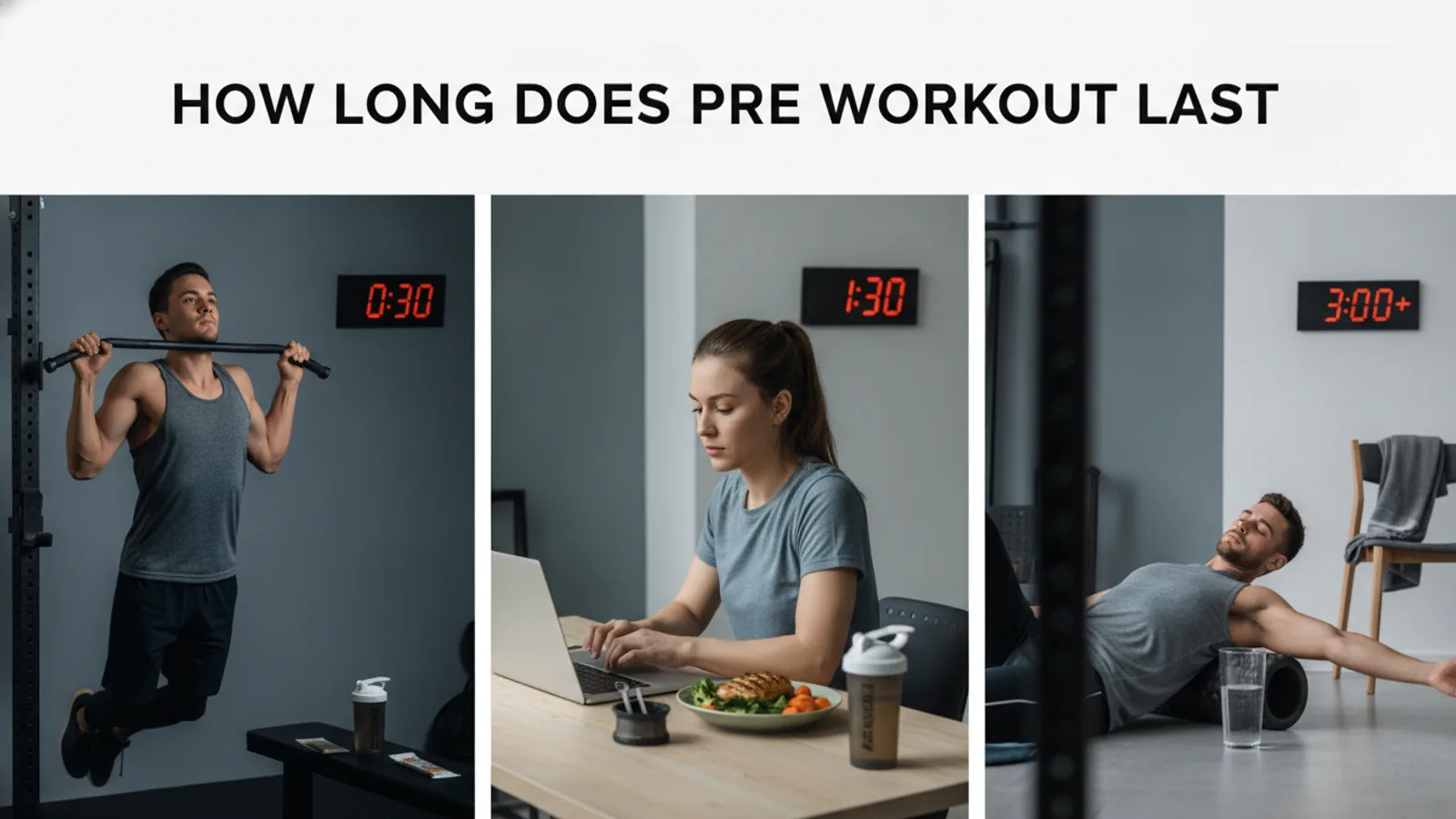
A good pre-workout supplement can give you the energy and focus needed for a great training session, but its effects don't last forever. Typically, the noticeable effects of pre-workout last for 1.5 to 3 hours. However, this can change based on the specific ingredients, your personal tolerance, and your metabolism. This guide will walk you through understanding this timeline so you can maximize your workout performance without sacrificing your sleep or well-being.
Fast Answer
- Peak Effects: 30-60 minutes after taking
- Noticeable Duration: 1.5 to 3 hours
- Caffeine Half-Life: 3 to 5 hours on average
- Safe Timing: At least 4-6 hours before bedtime
Before You Start
- Your Pre-Workout Supplement: Have the container handy so you can check the ingredient label and dosage instructions.
- Understanding of Your Body: Be aware of your general sensitivity to stimulants like caffeine. Are you a regular coffee drinker, or does one cup make you jittery?
- Your Workout Schedule: Know when you plan to exercise to time your pre-workout intake correctly.
Step-by-Step: Understanding Pre-Workout Duration
1. Analyze the Key Ingredients
The duration of your pre-workout's effects is determined by its active ingredients and their half-lives. The "half-life" is the time it takes for your body to process and eliminate half of the substance. Grab your supplement tub and look for these common ingredients:
- Caffeine: This is the most common stimulant. It blocks brain signals that make you feel tired. Caffeine's half-life is typically 3 to 5 hours, but it can be longer for some people. This means that 5 hours after you take 200mg of caffeine, you still have 100mg active in your system. This is the primary ingredient that affects sleep.
- Beta-Alanine: This amino acid causes a tingling sensation called paresthesia. It helps buffer acid in your muscles, which can improve endurance. The tingling effect is usually short-lived, lasting about 30 to 60 minutes, but its muscle-endurance benefits work throughout your session.
- L-Citrulline / Citrulline Malate: These ingredients boost nitric oxide production, which improves blood flow to your muscles, creating a "pump." The effects on blood flow peak around 60 to 90 minutes after consumption and support performance throughout your workout.
- Creatine: While often included in pre-workouts, creatine doesn't have an immediate, time-sensitive effect. It works by building up in your muscles over days and weeks to supply energy. Its presence in a pre-workout doesn't affect the short-term duration of energy and focus.
Understanding which of these are in your supplement, and in what amounts, is the first step to predicting how long it will last for you.
2. Time Your Dose for Peak Performance
The golden rule for timing is to consume your pre-workout 30 to 60 minutes before you start your workout. This window gives your body enough time to digest the ingredients and for them to enter your bloodstream. Taking it too early means you might feel the strongest effects before you've even started your main lifts. Taking it too late means you'll be halfway through your workout before you feel the full benefits.
For example, if you plan to start your workout at 5:30 PM, you should drink your pre-workout between 4:30 PM and 5:00 PM. This timing ensures that as the caffeine and other ingredients reach their peak levels in your system, you are just starting your most demanding exercises.
3. Assess Your Personal Influencing Factors
Not everyone reacts to pre-workout the same way. Several personal factors can change how long the effects last:
- Body Weight and Metabolism: A larger person may need a larger dose to feel the same effect, and a faster metabolism will process the ingredients more quickly, shortening the duration.
- Caffeine Tolerance: If you drink coffee or energy drinks daily, your body is likely accustomed to caffeine. You may find the effects of pre-workout feel less intense and shorter-lived. Conversely, if you rarely consume caffeine, you will be much more sensitive.
- Genetics: Some people have genes that make them "fast" or "slow" metabolizers of caffeine. A slow metabolizer will feel the effects for a much longer period, making them more prone to sleep issues.
- Hydration and Nutrition: Being properly hydrated helps your body transport and utilize the ingredients efficiently. Taking pre-workout on a full stomach can slow down absorption and slightly delay the onset of effects.
To gauge your response, start with a half-scoop the first time you try a new pre-workout. This allows you to see how you feel without committing to a full dose of stimulants.
4. Monitor the Phases of Effect
Pre-workout effects follow a predictable curve. Knowing what to expect can help you structure your workout accordingly. The experience can be broken down into three main phases:
- The "Kick-In" (15-30 minutes): You'll start to feel the initial effects. For many, this includes the tingling from beta-alanine and a growing sense of alertness and energy from the caffeine.
- Peak Performance Window (30-90 minutes): This is when the active ingredients are at their highest concentration in your blood. You should feel the most significant boost in energy, focus, and endurance. This is the ideal time to tackle the most challenging parts of your workout.
- The "Wear-Off" (1.5 - 3 hours+): After the peak, the noticeable effects will gradually fade. You'll still have stimulants in your system, but the powerful energetic feeling will diminish. A well-formulated pre-workout should provide a smooth decrease in energy, not a sudden "crash."
5. Plan Your Dose Around Sleep
This is arguably the most critical step for long-term health and recovery. Because caffeine has a half-life of 3-5 hours (or more), taking it too close to bedtime can severely disrupt your sleep, even if you don't feel "wired." Poor sleep hurts muscle recovery, hormone regulation, and overall performance.
As a general rule, you should avoid taking any stimulant-based pre-workout within 6 hours of your intended bedtime. If you have an evening workout, for example at 7 PM, and you go to bed at 11 PM, taking a pre-workout is not recommended. In this scenario, you should opt for a stimulant-free pre-workout, which provides pump and endurance ingredients like L-Citrulline without any caffeine.
Quick Reference
| Situation | Recommended Action | Why |
|---|---|---|
| Morning Workout (e.g., 7 AM) | Take full dose around 6:30 AM | Maximizes energy for the session with no impact on nighttime sleep. |
| Evening Workout (e.g., 6 PM) | Use a half-dose or a stim-free version | Prevents caffeine from disrupting your sleep schedule later that night. |
| Feeling too jittery or anxious | Reduce dose to a half-scoop | Lowers the total stimulant intake to better match your personal tolerance. |
| Not feeling the effects anymore | Take a 1-2 week break (cycle off) | Resets your body's tolerance to the ingredients, making them effective again. |
Common Problems When Gauging Pre-Workout Duration
- Problem: The energy "crash" after a workout.
Some pre-workouts with very high stimulant doses can lead to a sharp drop in energy as they wear off. To fix this, look for supplements with more moderate caffeine levels or those that include ingredients like L-theanine, which can smooth out the energy curve. Proper post-workout nutrition, including carbohydrates and protein, is also essential to replenish your energy stores. - Problem: You can't fall asleep at night.
This is almost always caused by taking a stimulant-based pre-workout too late in the day. The solution is to create a strict cutoff time, at least 6 hours before bed. If you must train in the evening, switch to a stimulant-free formula. - Problem: You get the jitters or feel anxious.
This is a classic sign of taking too many stimulants for your tolerance. The immediate fix is to reduce your dosage. Start with a quarter or half scoop and see how you feel. You can also try taking it with a small carbohydrate snack to slow absorption. - Problem: You don't feel anything at all.
This is a clear sign of tolerance buildup. Your body has adapted to the stimulants. The only effective solution is to take a "stimulant holiday" or cycle off. Stop using all pre-workouts and reduce other sources of caffeine for 1 to 2 weeks to reset your sensitivity.
Advanced Tips for Managing Pre-Workout Effects
- Cycle Your Pre-Workout Usage: To prevent tolerance and give your adrenal system a break, don't use pre-workout every single day. A common strategy is to use it for 4-6 weeks, followed by a 1-2 week break. You can also save it for your most demanding workout days, like leg day or a heavy lifting session.
- Stay Exceptionally Hydrated: Water is crucial for performance and for helping your body process the supplement ingredients. Stimulants like caffeine have a mild diuretic effect. Make sure you drink plenty of water before, during, and after your workout to avoid dehydration, which can cause headaches and fatigue.
- Understand "Stim-Free" vs. "Low-Stim": If you're sensitive to caffeine, a stim-free pre-workout is your best bet for evening workouts. These focus on pump and endurance. A "low-stim" product might still contain 50-100mg of caffeine, which is about the same as a small cup of coffee, and could still affect sleep for sensitive individuals. Always check the label.
How Long Does Pre Workout Last FAQ
How long does the tingling from beta-alanine last?
The tingling sensation, known as paresthesia, is harmless and typically lasts for 30 to 60 minutes after you take your pre-workout. It usually subsides as you begin your workout and your body starts moving.
How long does pre-workout stay in your system?
While the noticeable effects last 1.5-3 hours, the ingredients remain much longer. Caffeine, for example, can be detected in your system for up to 10 hours. This is why timing it correctly is so important for sleep.
Can you take pre-workout and then not work out?
You can, but it's not ideal. You'll have an elevated heart rate and energy from the stimulants with no physical outlet for it. This can lead to feelings of anxiety, restlessness, and jitters. It's best to only use it when you intend to exercise.
Does food affect how long pre-workout lasts?
Yes. Taking pre-workout on a full stomach will slow down its absorption, leading to a more gradual and potentially less intense onset of effects. For the fastest and strongest effect, take it on an empty or nearly empty stomach, but be aware this can also increase the chance of jitters.
Final Checklist for Using Pre-Workout Effectively
- Read the Label: Always check the caffeine content and serving size before taking any pre-workout.
- Time it Right: Consume your dose 30-60 minutes before you begin your training session.
- Respect Your Bedtime: Avoid all stimulants at least 6 hours before you plan to go to sleep.
- Start Small: When trying a new product, always begin with a half-dose to assess your personal tolerance.
- Cycle Your Use: Plan to take a 1-2 week break from stimulants every 4-6 weeks to keep the effects potent.
- Hydrate: Drink plenty of water throughout the day to support the supplement's effectiveness and your overall health.